The following letter under this title appeared in Local Transport Today 769 (29 March – 11April 2019). Continue reading
“Changing social norms is vital for 20 mph success”
2 Replies
The following letter under this title appeared in Local Transport Today 769 (29 March – 11April 2019). Continue reading
In our Charter we give a commitment to: “Find new measures to define the level of danger on our roads. These would more accurately monitor the use of and threat to benign modes.” This post is part of our work at doing that – hopefully it will contribute to debate. It is based on a document by PACTS given to the Transport Committee Active Travel enquiry in December 2018.
In previous posts and discussions, we have spent a lot of time talking about the need to have measures and targets for benign transport modes expressed with a measure of exposure – e.g. casualty rates per distance, or time, or number of trips travelled. Examples are here and here . In this post we move on to look at the question of: Who Kills/Hurts/Endangers Whom?
The previous post has had more views than any other in our history. We have received significant support for its content in comments and on Twitter, and also – as one must expect in the age of social media – abuse and insult. Although readers will judge for themselves, it is striking how the insults have been based on a lack of evidence and – above all – misreading of what the piece was about.
So, to repudiate the insults, let’s clarify what the piece was – and more importantly was not – about. We can then move on to an assessment of where we are now after an extraordinary week.
Earlier this month there was a fuss when the BBC was accused of bias over attempting to “achieve balance” by inviting a climate change sceptic to appear opposite a climate scientist Today’s example on BBC Radio 4 World at One was, in my opinion, at least if not more egregious.
Here is our response to Transport for London’s consultation on making lorries in London safer, made with our fellow organisations on the Action on Lorry danger working group: Continue reading
For anybody who needs convincing that the official “road safety” establishment is part of the problem of danger on the roads, look no further than SUPPORTING SAFE DRIVING INTO OLD AGE: A National Older Driver Strategy . Allegedly addressing the problems of older drivers, this report – as so much of official “road safety” does routinely – accommodates them to the detriment of their actual or potential victims. Continue reading
The letters pages of the transport professionals’ fortnightly, Local Transport Today, have recently carried an unprecedentedly long correspondence about the statistical analysis of the effects of speed cameras. We welcome in-depth statistical analysis of “road safety” interventions such as cameras. However, our take on how results should be interpreted – and indeed, what “works” actually means in the overall context of reducing road danger over time – is different from most of the participants. Here is our contribution to – and comments on – the debate: Continue reading
Here is our joint response with CTC, London Cycling Campaign, RoadPeace, Sustrans, 20s Plenty for Us and Living Streets:- oLondonAssemblyPoliceandCrimeCommitteereroadtrafficcrime
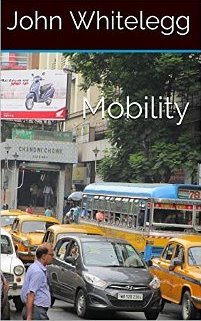
“Mobility measured crudely in terms of how many kilometres we move around every day has nothing whatsoever to do with quality of life, rich human interaction, satisfaction, happiness and a detailed knowledge and familiarity with places and the things we chose to do in those places.” Continue reading
 Road Danger Reduction Forum