This report summarises the talks and comments from the audience at the first of our annual conferences on Road Danger Reduction and Enforcement, with presentations and hand outs here
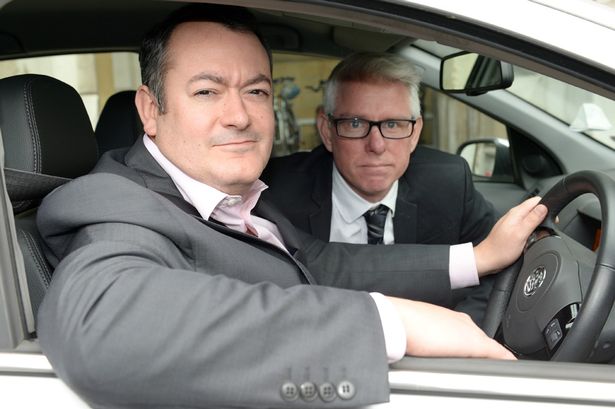
In the last week of November 2014, the Labour shadow Minister, Michael Dugher MP, set out Labour’s “cycling vision”. I reproduce the statement from Local Transport Today with comments: Continue reading
Our last post is one of the most well-read and commented on since www.rdrf.org.uk went live, with particular support on social media from supporters of cycling and sustainable transport. We’re aware that many people with good intentions feel that supporting Road Safety Week (RSW) is worthwhile. We don’t. As I concluded after a debate with Brake at the end of the post:
“…a generally “fluffy” approach appealing to people to try to be nice if they feel like it is exactly what has not worked to reduce danger on the roads – whatever the feelings of people involved (and I should add that these feelings are frequently highly commendable). Wanting people to be less dangerous and telling this to whoever wants to listen is not only not enough, unless you address important obstacles – often represented by your partners – it can become part of the problem.”
Brake initially responded by accusing us of insulting those bereaved by road crashes – which we strongly deny and bitterly resent – and then took the trouble to engage in responses to our concerns. We’re happy to continue the debate. To repeat: “I raise these issues because I hope they can assist people in developing and supporting programmes for road danger reduction: real road safety, Safer Roads for All.” Continue reading
Earlier this year the RDRF responded to Transport for London’s Draft Cycle Safety Action Plan (CSAP) here and here .
I argued then that: “The draft CSAP is a fundamentally flawed document which fails in three main respects. Firstly, its idea of “safety” for cyclists is measured in a way which can indicate that having fewer cyclists and a higher cyclist casualty rate is BETTER than having more cyclists and a lower casualty rate. Secondly, it fails to differentiate between measures which reduce danger to cyclists (and other road users) and those which do not. Thirdly, it has no real way of assessing the effects of measures implemented.”
The new CSAP is now out . Apart from some typographical differences, there are only two noticeable changes. One of these changes seems to be simply cosmetic, the other could potentially have an effect, but I suggest is unlikely to. (So much for the effects of consultation). I discuss these changes below along with general comments: if these seem the same as before it’s because (apart from the two changes) the criticisms remain the same. So: Continue reading
Here’s how to do a bit of reporting which is not just sloppy, but (no doubt unwittingly) contains important prejudices about cycling.
Here we go: Continue reading
This is our response to the draft Cycle Safety Action Plan issued by Transport for London, which you can respond to here by Thursday July 25th .
The draft CSAP is a fundamentally flawed document which fails in three main respects. Firstly, its idea of “safety” for cyclists is measured in a way which can indicate that having fewer cyclists and a higher cyclist casualty rate is BETTER than having more cyclists and a lower casualty rate. Secondly, it fails to differentiate between measures which reduce danger to cyclists (and other road users) and those which do not. Thirdly, it has no real way of assessing the effects of measures implemented. Continue reading
I have already confessed my love for cycle sport in general and the Tour de France in particular – while arguing that that the Tour in Britain may have had a negative effect on the prospects for everyday cycling. It’s not just that the benefits of cycling as sport for cycling as transport are limited – the Tour de France is, after all, not supposed to be more than, well, the Tour de France. It’s that the impressions of what “cycling” is, as derived from the Tour and cycle sport in general, can actually impede the progress of cycling as transport.
I’ve enjoyed the Tour in the UK, and will stay glued to it. But it is time to review the situation with some observations of where we are and what the effect of the Tour may be.
Although the image below is a bit difficult to make out (the original is here), we reproduce it and take some time to examine its message as delivered by the “South Yorkshire Safer Roads Partnership” (SYSRP) . It is typical of why official “road safety” – as opposed to the real road safety of road danger reduction – is part of the problem of danger on the roads and discrimination against cycling and sustainable transport.

 Road Danger Reduction Forum