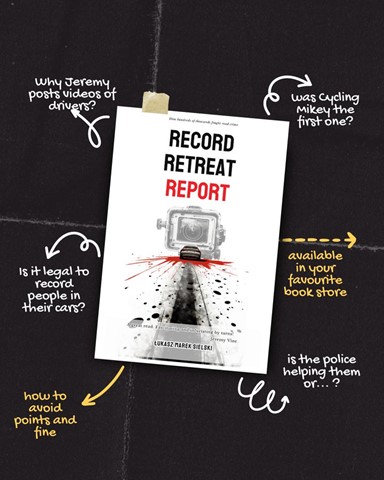
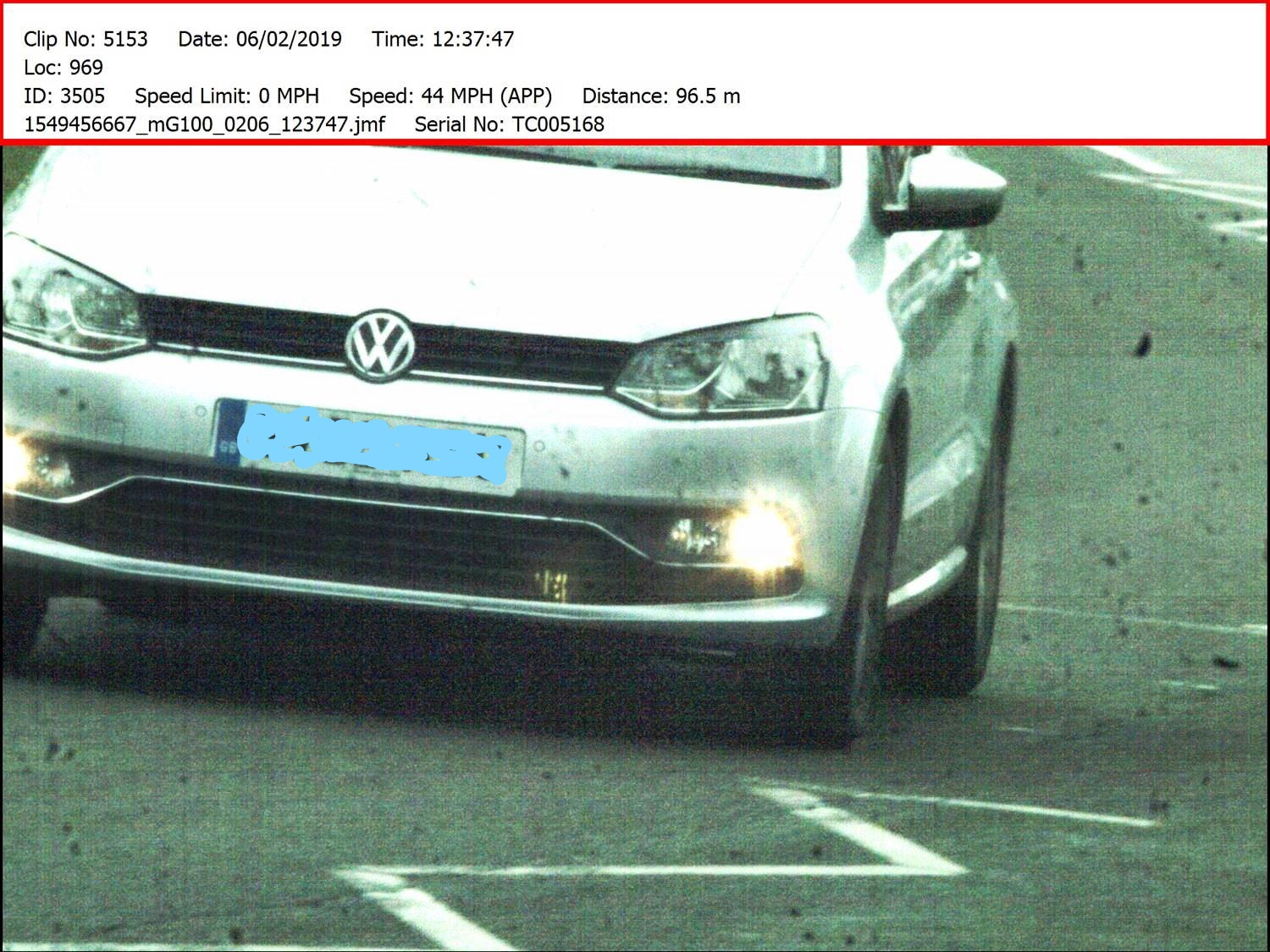
In my book reviews, I often urge supporters of Road Danger Reduction to read the book I comment on. This book is one which should not only be bought but used as a campaigning tool for engagement with your local “road safety” professionals and/or your UK Police Service. It’s nominally about a niche area of activity – 3rd party reporting – but the reaction to it tells you a very great deal about driver law-breaking and how we can challenge it.
That’s the key issue here. While the way in which liaison with your local Police can help in cutting specific types of road danger (close passing of cyclists, phone use and in the future speeding) varies, what really counts for me is the massive and hysterical reaction from driver bigots to those involved with 3rd party reporting.
I’ll be concentrating on these and other issues arising from 3rd party reporting, rather than just describing Sielski’s history of the practice in the UK.
1. Move UK away from dependence on private motor transport, which is unsustainable, wasteful, unsafe and is a deterrent to walking and cycling, by incentivising sustainable, active travel and public transport and by deterring unnecessary motor vehicle use by road pricing.
2. Cut the road building budget (c. £7 billion*) and reallocate for sustainable transport including:
£2 billion p.a. for Active Travel routes to deliver target of 50% of urban trips on foot or by bicycle by 2030.
3. Enforce road traffic law effectively through a substantial increase in roads policing, including national support for 3rd party reporting, with emphasis on minor penalties for common offences implicated in causing death and injury to others. Allocate an additional £500 million p.a. to be spent on road traffic policing.
4. Implement a National Road Safety Strategy with headline targets to reduce the danger that road users can pose to others, the establishment of a Road Safety Investigation Branch and lower speed limits with default of 20mph on urban roads and 40mph max on country lanes.
5. Legislate for and incentivise use of smaller, slower, safer, sustainable motor vehicles for passengers and freight. Taxation should be based on vehicle size, weight, and fuel with an objective being the reduction of use of SUVs in urban areas.
6. Commission a review of all road traffic laws to secure “roadjustice”.
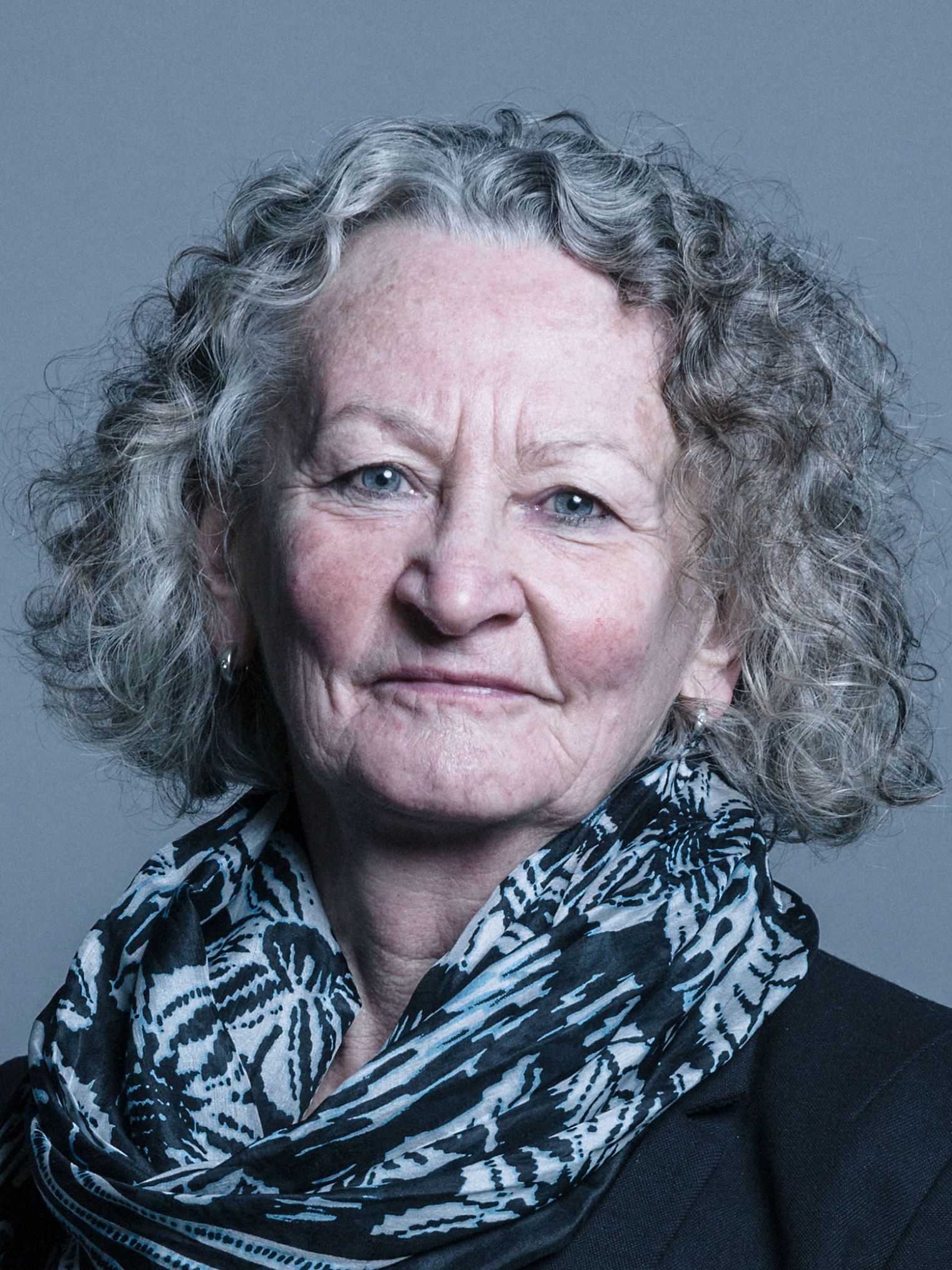
Road Danger Reduction Forum President Baroness Jenny Jones said:
“Victims of road crashes – whether those injured or those who have lost loved ones – suffer appallingly, not least with an often overly lenient attitude in the justice system. The only civilised approach to this is to reduce danger at source – from those with the potential to hurt or kill others”, says Baroness Jones.
“Measures to curb road danger have to be part of a transport policy – unlike the one we have had for decades – which is less car dependent, and which supports active and less polluting forms of transport: this can also cut the deaths from inactive lives and vehicle emissions, as well as those from road crashes.”
It’s not right to expect children to wear body armour and high visibility clothing to (supposedly) protect themselves, while adults with a ton of metal around them are permitted to get away with dangerous and unnecessary driving which scares them off the streets.”
For further information, or if you want your organisation to sign up to the Manifesto, contact:
We’ll be commenting further here and on @CHAIRRDRF about other Manifestos, why ours is different and what we have in common. 19th June 2024
*The 2nd Roads Investment Strategy (RIS2) was £27.4bn when it was first announced in March 2020 (and that was to cover the 5 years from April 2020 to March 2025)to £24bn in the October 2021 Spending Review. About £14.1bn of it was for actually building new road capacity. The roads budget for beyond March 2025 (i.e. RIS3) has yet to be set – we believe that there should be a presumption against creating new capacity which will induce or generate more motor vehicular traffic.
RDRF supporters may have noticed that there has been an absence of blog posts here (leaving aside a book review and details of our conference) for two years. That doesn’t mean we haven’t been active – far from it. The main reason for no posts is that my activity in monitoring and responding to transport issues formed during the COVID-19 crisis has been through the weekly webinar for Active Travel professionals and campaigners www.ideaswithbeers.co.uk (more of which below).
And our other RDRF Committee members have been busy with:
Brenda Puech: Continuing work as a disabilities/inclusive access consultant and carrying on her pioneering work on Street Parklets with London Living Streets.
Lucy Marstrand-Taussig: Lucy has been working as a consultant for Active Travel England, specialising in work with women and children.
Ken Spence: With the Transport Initiatives team Ken has been working on Local Authority Local Cycling and Walking Implementation Plans (LCWIPs).
Colin McKenzie: The team at LB Ealing he works in has implemented wand-protected (light segregation) cycle lanes on main roads, and despite a pull back on LTNs, some with key cycle route links in Ealing have been retained.
Ideas With Beers
While working in Manchester, Brian Deegan (long term highway engineer working on creating cycling and walking friendly environments) had an informal discussion session for engineers and other colleagues after work. When the first lockdown hit and the transport world was buzzing with measures taken worldwide to re-allocate road space, this shifted to an online weekly webinar. The name chosen, as the first real world meetings were held over a post-work drink, was “Ideas With Beers” – but we make it clear that drinking is neither encouraged nor typical by attendees! Each session starts with yours truly providing a weekly news update on developments.
That led to the kind of enthusiasm from transport professionals and campaigners that has formed in a community that meets at Ideas With Beers (as well as in gatherings like the Landor Conferences Walking and Cycling conferences, Transport Planning Society etc.) So do join in by getting details from www.ideaswithbeers.co.uk and if you can’t make Tuesdays at 5 pm, check out the videos and slides from previous issues.
Onwards!
RDRF is also involved in providing training sessions in Road Danger Reduction – what it is and how it differs from traditional “road safety”. There is a lot of interest out there, and some positive moves such as the (ongoing) formation of Active Travel England, the setting of a default 20 mph limit by the Welsh Senedd, and positive noises from the devolved government in Scotland. But then we have also had the disappointments of COP 26 and the continuing commitment to road building in the UK through RIS2 and probably RIS3…
So, it’s all to play for. RDRF is as committed as ever and we hope you’ll be with us for the journey!
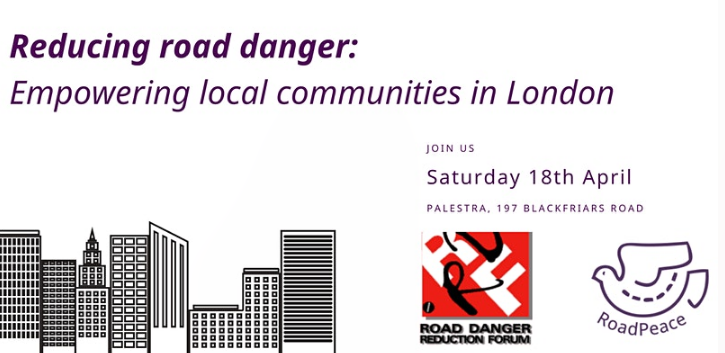
We’re delighted that our Conference (jointly organised with RoadPeace) which was due to be held in April, will now happen as two webinars on October 22nd and 29th at 4 pm:
“ Reducing Road Danger: Empowering Local Communities”.
We have decided to POSTPONE rather than CANCEL this conference until later this year – we will set a new date in the summer with our speakers as the COVID-19 situation develops. We have had substantial interest in the conference and think it would be wrong to abandon it. Regrettably road danger will not disappear in the meantime, and the need for such events will continue. Hopefully a new spirit of concern for public safety in the current emergency can give impetus to efforts to reduce road danger.
We look forward to re-posting details of the event later in the year.
(This article appeared in the 19th July 2019 issue of Local Transport Today as “Viewpoint” – online here)
Last week Lord Berkeley retired after 26 years as President of the Road Danger Reduction Forum (RDRF). So what has been achieved since we were set up in 1993? Is road danger being properly addressed? And since governance of policy on safety on the road is always part of wider transport policy, is the way our society views transport what we need for the 21st century? Despite some positive developments, the answer for both is no.
Tony Berkeley, President of the Road Danger Reduction Forum since its beginning in 1993, has retired from his position with the new interim President to be Baroness Jones of Moulsecoomb.
Lord Berkeley said:
“After 26 years I am glad that Road Danger Reduction is now on the agenda as the way for improving safety for all road users. First the pedestrian and cyclist groups were on board, and the now the phrase is being used widely, such as in the Mayor of London’s Transport Strategy, an important policy statement. I’m pleased that Jenny Jones will be taking up my role – we need to press ahead to make sure that danger is reduced at source, and not just talking about doing so.”
Jenny Jones has worked in the London Assembly and House of Lords for road danger reduction.
She says: “Our streets should belong to people first, vehicles second”. Jenny has worked to make safe space for walking and cycling, to improve public transport and to reduce traffic levels.
Current work by the RDRF includes being the Secretariat for West Midlands Police Road Harm Prevention Team, delivering training in road danger reduction to transport professionals, and advising transport authorities and campaigning groups.
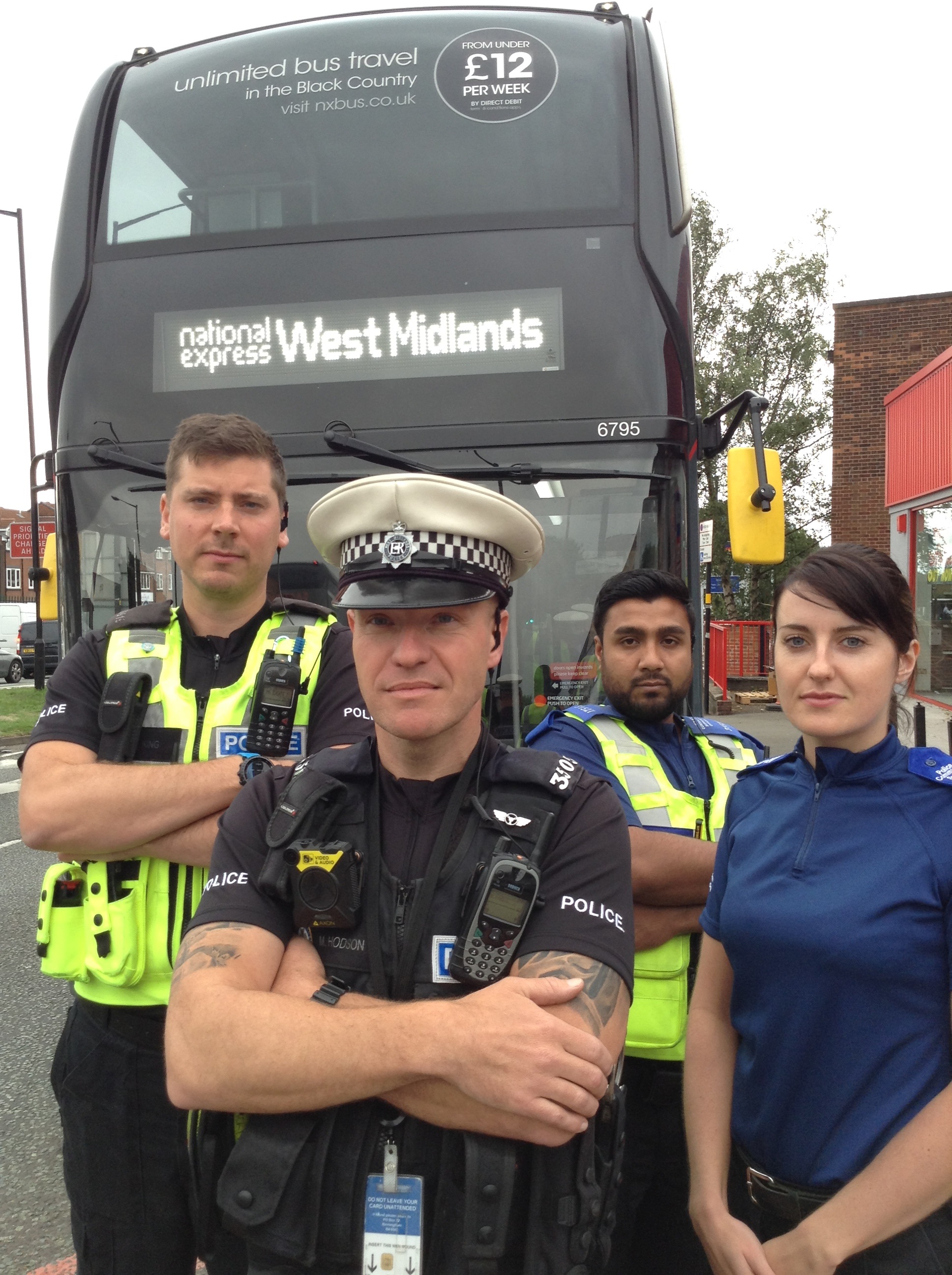
As Secretariat for WMPRHRT we’re pleased to report on this approach adopted by them and described by PC Mark Hodson at the Leicester University Law School March 29th conference on Law Enforcement and Vulnerable Road Users.
At the “Cycle City Active City” conference in Manchester in July Road Safety Minister Jesse Norman commended the work on policing close passing of cyclists sby PCs Mark Hodson and Steve Hudson of the West Midlands Police Road Harm Reduction Team (WMPRHRT), saying his Department “plans to build on it – it is a very effective way of building awareness and reducing casualties”.
By now readers of posts on this site will be aware of the existence of operations policing the close passing of cyclists and related enforcement based on reducing road danger at source. Our last update of what is happening nationally is here.
This post is about the work WMPRHRT carry out in general. For us they have been setting the Gold Standard for road danger reduction policing with the typical resources (the Metropolitan Police being the exception that proves the rule here) of a Police Service.
In broad terms, we support the ideas and recommendations set out by Cycling UK in their excellent “Cycle Safety: Make It Simple”report.
In this report we look more closely at issues such as: side road junctions and engineering convention, the issue of equality in transport design and practice, and the need for parity of spending for roads transport so that it is fairer to women, children and the disabled.
This document follows the structure set out by the Department for Transport CWIS Safety Review Survey.
1. Infrastructure and traffic signs
2. The laws and rules of the road
3. Training
4. Educating road users
5. Vehicles and equipment
6. Attitudes and public awareness
We respond to questions with specific recommendations. Continue reading →


 Road Danger Reduction Forum