Category Archives: Cycling

What’s wrong with Halfords’ “Cycling Top Tips”?

scan0001

From Halfords cycle2work leaflet

 Halfords, as well as being a large car parts and servicing business, is a major cycle retail business and operates a “Cycle to Work” government approved initiative to enable employees to use a bike and accessories to cycle to work. We think the extract from their “cycle2work” leaflet sends out the wrong message about cycling. Here’s why: Continue reading

What is the Advertising Standards Authority for?

warnings2

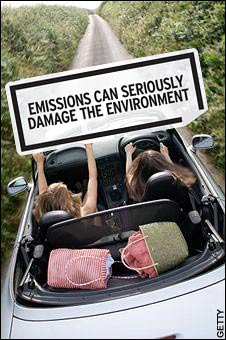
Health warnings on car ads?

UPDATE 25th June 2014:

The ASA has now changed it’s mind on this matter . Hopefully partly as a result of the information contained in the protests to it from organisations and individuals like ours.

First, the good news. The idiotic ruling of the ASA described here has been withdrawn following a veritable storm of protest. It is good to see that a diverse (and normally often disunited) community of cyclists and others concerned about a civilised approach to cycling and safety on the road can swiftly summon up good quality arguments and have an effect.

But this is just the start. This matter is far from being resolved, and it may well be that the outcome is a quite unsatisfactory judgement about the portrayal of cycling. We need to examine the issues regarding ASA judgements on matters of safety on the road in more detail. Continue reading

An idiotic judgement by the Advertising Standards Authority

Nice%20Way%20Code%20screenshot

 You were are not supposed to see this picture

UPDATE 25th June 2014:

The ASA has now changed it’s mind on this matter . Hopefully partly as a result of the information contained in the protests to it from organisations and individuals like ours. (See also our next post)

A piece of idiocy by the ASA has caused justified anger among cycling groups and others concerned with a civilised approach to danger on the road.


You can read about it here here here  and also here the CTC’s comments are here:

 The RDRF objects to the ASA’s decision on the basis that: Continue reading

The effects of New Zealand’s cycle helmet law: The evidence and what it means.

Our post on the effects of the NZ cycle helmet law  has had more views than any other so far on www.rdrf.org.uk . Prompted by this, below we:

(i)              Give fuller references to the evidence.

(ii)             Suggest the reason for the observed changes (particularly the apparent adverse effects on cyclist casualty rates).

(iii)              Look at helmet advocacy in the context of a car dominated “road safety” culture.

Continue reading

Cyclists stay back

cycle sticker1

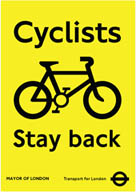
 If you cycle in London, you’ve almost certainly seen these yellow stickers over the last few months. They’re on the back of most buses, many vans, and a few HGVs.

What can they mean?

Cyclists stay back – I get priority as I pay road tax / am bigger / faster / more important than you“?

or

Cyclists stay back – I can’t be bothered to check my mirrors before turning, stopping or pulling out, so if I run into you it’s your fault“?

Most people reading this will know that there’s a major safety issue for cyclists and pedestrians that HGV drivers can’t see all round their vehicles, and often drive into roadspace without knowing if anyone is already in it. As a result, around 50% of cyclist fatalities in London involve HGVs. (This is often referred to as the “blindspot” issue)

But what does that have to do with vans and buses? And how many of those seeing the sign on a van or bus make the connection? Continue reading

The effects of New Zealand’s cycle helmet law

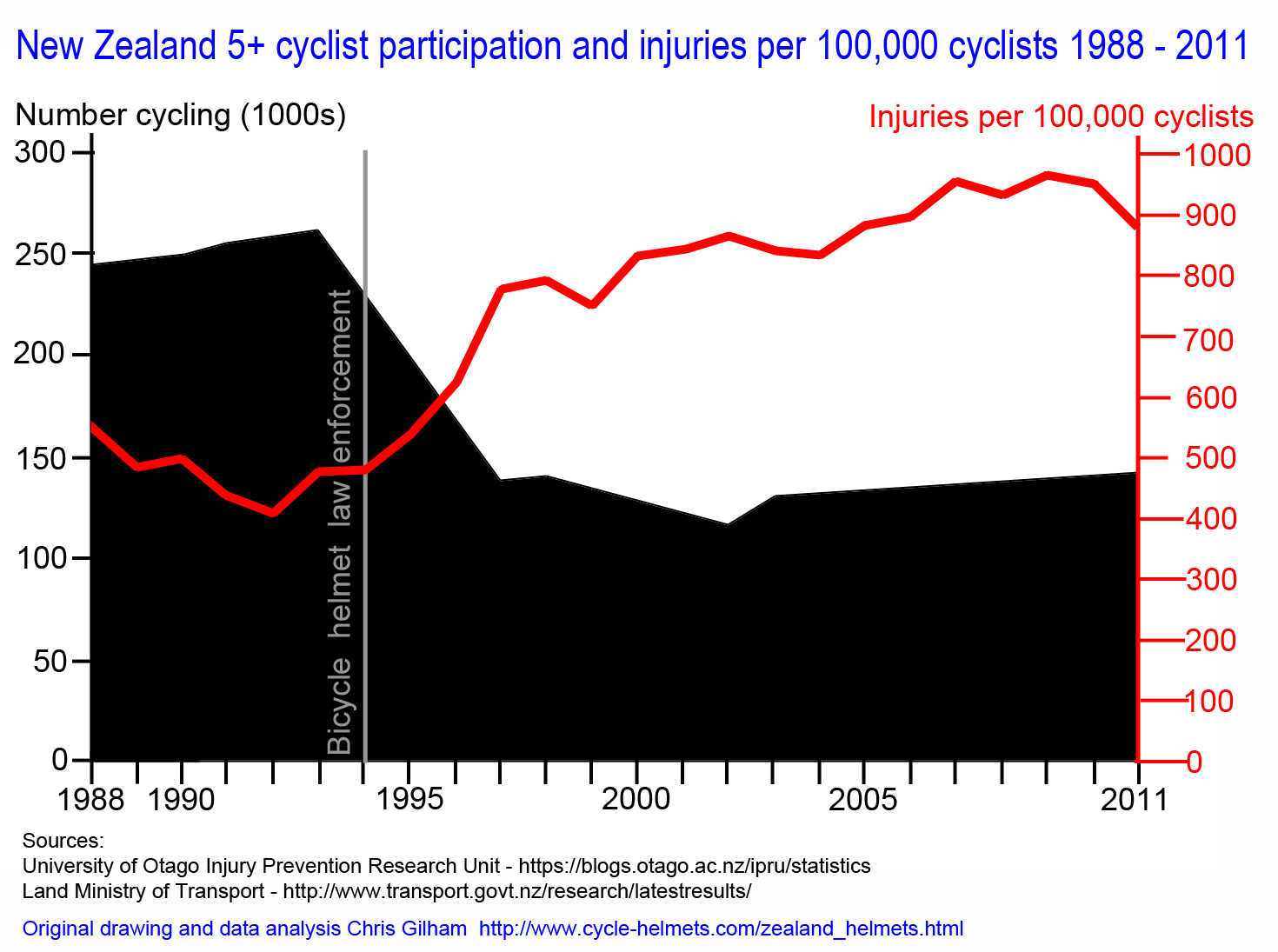
Below is a  graph by Chris Gilham looking at cycling (those of all ages over 5) in New Zealand. Look at levels of cycling and the cyclist injury rate following the introduction of the mandatory cycle helmet law. More to come on the analysis of this graph in the next post.

NewZealandHelmetsv6For more detailed evidence on the effect of the NZ law, and what it means, see our post here

What traffic policing COULD be like

My last post argues in favour of the potential benefits from traffic policing, but that – unlike the apparent bias underlying Operation Safeway – it needs to be done differently. The key point is to prioritise law and rule breaking done by those with greater potential to endanger other road users. Otherwise the bias, which is not so much against law breaking cyclists as in favour of law and rule breaking motorists, will continue. So here are some ideas: Continue reading

Is there a police blitz on unsafe driving in London?

Clare in the community: Phoney war

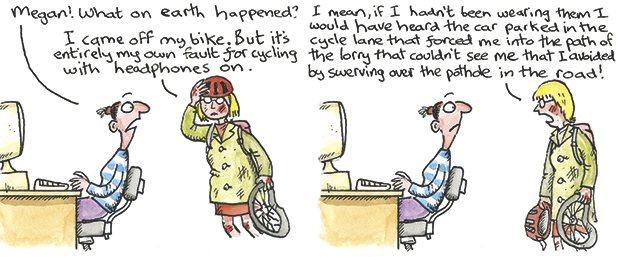
Harry Venning of the Guardian’s take on the “blitz” in “Clare in the Community”

After a spate of cyclist deaths in London, cyclist safety is on the national agenda. For some, getting cyclist safety in the public eye is inherently good – we’re not so sure. The key issue is, after all, to do the right things for the safety of cyclists. Last week we were told that there is a “new zero-tolerance approach”  with a “huge escalation” in policing involving “stopping lorries and cars and where there is unsafe driving they will be taken off the road.”

But is a blitz on unsafe driving – under what is called “Operation Safeway” in London – actually happening? We don’t think so. So what exactly is going on? Continue reading

Do bicycle lights make any difference to cyclist safety?

After a week where cyclist safety in London has hit the headlines, it might seem strange to look at this issue. I was pleased to represent the RDRF at the Bow roundabout protest organised by the London Cycling Campaign addressing issues about danger to cyclists and pedestrians there.

Bowroundaboutprotest1113

Spot the RDRF Chair at Bow roundabout protest (Photo London Cycling Campaign)

But actually the comments by the Commissioner of Transport for London on this subject – bike lights, that is – tell us a lot about the way “road safety” is thought of. Here are his comments: Continue reading