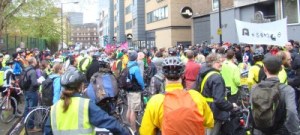
- Cyclists protest outside Addison Lee HQ: (Photo: Big Smoke)

We are pleased to support “See Me Save Me”. It is an organisation entrenched in the road danger reduction approach : and as such committed to reducing danger from lorries – towards pedestrians as well as cyclists – at source. We believe that doing this will require examining what exactly is meant by a “blind spot”. This not so much a question of technical fixes, but like all questions of safety on the road, about the power of some road users to endanger others. Continue reading

As we approach the 27th anniversary of one of the first “road safety” conferences I ever attended, “Ways to safer cycling” , I recall the words of the key speaker there: Minister of State, Lynda Chalker: “To the “Three Es” of road safety: Engineering, Education and Enforcement, we should add a fourth “E” – Encouragement – we should be encouraging cycling”. It serves as an introduction to a progress report on current campaigning for cyclists’ safety.
In some ways, we have moved forward since 1985. At the same conference I also remember the words of the Chairman, Lord Nugent of the Royal Society for the Prevention of Accidents (RoSPA), to the effect that the onus of responsibility was on cyclists when it came to cyclists’ safety , because “You’re the ones who are vulnerable”. These words seemed to upset the Department of Transport minders: he was off message then, and you wouldn’t get away with it now. Also, the notorious words of the Chief Engineer from Cambridge City Council: “If you are thinking of cycling in a modern city: don’t”. You wouldn’t get away with that either.
But how much has actually changed? Continue reading

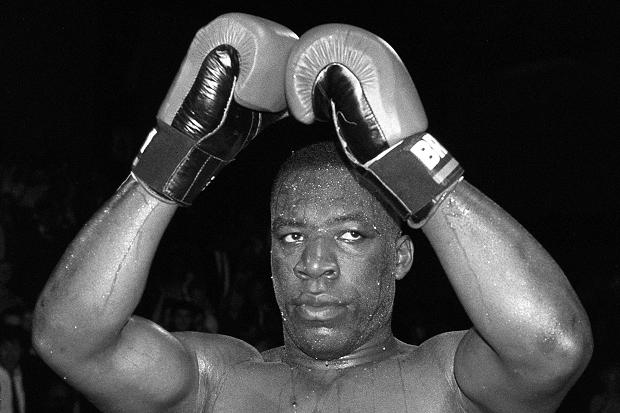
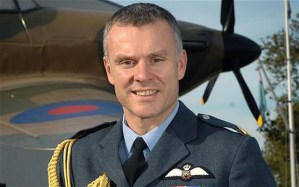
Eilidh Cairns;Gary Mason; Tom Barrett; Photos from:RoadPeace; The Times; RAF
If any of the campaigns for cyclist safety are to actually achieve anything there is an absolutely central problem which needs addressing. This is the ability of the motorised to shift responsibility for their lethal behaviour on to their actual and potential victims – through the simple act of saying that they don’t “see” their victims. Below we look at two current and one recent case of cyclists killed in London .
While reading these cases, consider Rule 126 of the Highway Code:
“126: Stopping Distances: Drive at a speed that will allow you to stop well within the distance you can see to be clear.” Continue reading
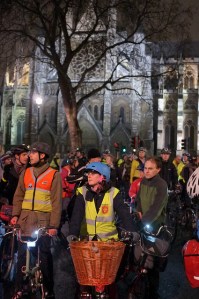
Photo: Jack Thurston (The Bike Show)
Last night RDRF Committee members Dr. Robert Davis and Ken Spence took part in the “flashride” organised to show cyclists’ presence to MPs ahead of today’s debate. It was a happy and peaceful event with hundreds (or more) turning out to support ways to reduce danger to cyclists and others. We’re pleased to be part of this movement, not least with the joyful way it manifests itself.
Unfortunately, my view is that little of benefit will come from today’s debate. I hope this is wrong – but here’s why I’m pessimistic. Continue reading
 Above is a list of organisations including ourselves, who have signed the briefing note drafted by the UK Cycling Alliance for the debate on Cycle Safety on Thursday. Below we reprint the text.
We signed this note since it states some very simple and basic points which any reasonable person or organisation should be able to support. The down side is that – precisely because it is so basic -we will need something a lot more forceful and detailed if we are to get a genuine commitment towards achieving a properly civilised approach to the safety and well being of cyclists (and indeed other road users). After all, if it hadn’t been so basic the AA would not have signed it. (And don’t hold your breath for seeing the RDRF logo alongside the AA’s again!) Continue reading
Now that I have your attention here’s a dictionary definition of that word:
Because what I think we need to do is examine the Paradox of Safety on the Roads: doing so should enable us to more accurately work out what the problem of safety for cyclists is about. Unless we do so, there is a very real danger (that word again…) that the current campaign will be fruitless. Continue reading
This may appear to be a break from discussion of the current major campaigns for cyclist safety – but it is not. While cyclists are not directly mentioned, consideration of this issue is crucial to addressing safety for all road users, including cyclists.
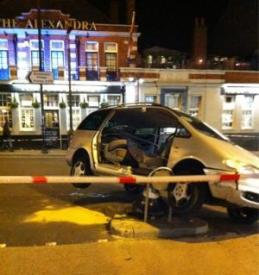
This issue is how – supposedly – trees, bollards and other inanimate objects are “dangerous”. It tells us much of what we need to know about the official view of “road safety”. Continue reading
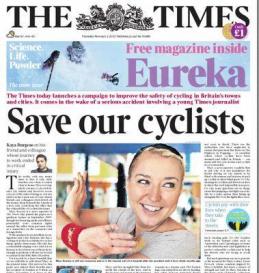
The devotion of a whole front page by The Times to cyclist safety is quite extraordinary. RDRF has, along with other organisations and 17,000 individuals as of the first draft of this post on 5th February signed up to it. But will this campaign fizzle out like the ones waged by The Independent and the London Evening Standard – let alone safety campaigns launched throughout the last century? At the risk of seeming overly negative, we have to question features of this campaign and ask what will be required to effectively pursue the good intentions that exist.
After all, “safety on the road” can mean all kinds of things: from misguided and counterproductive fantasies through to getting the most vulnerable out of the way of the most dangerous. Public figures have signed up to The Times campaign – as they would to motherhood and apple pie. Below we analyse the campaign in detail: its potential for reducing danger on the road to cyclists and other road users, what will be required to pursue these objectives – and the problems that have already surfaced. Continue reading
 Road Danger Reduction Forum