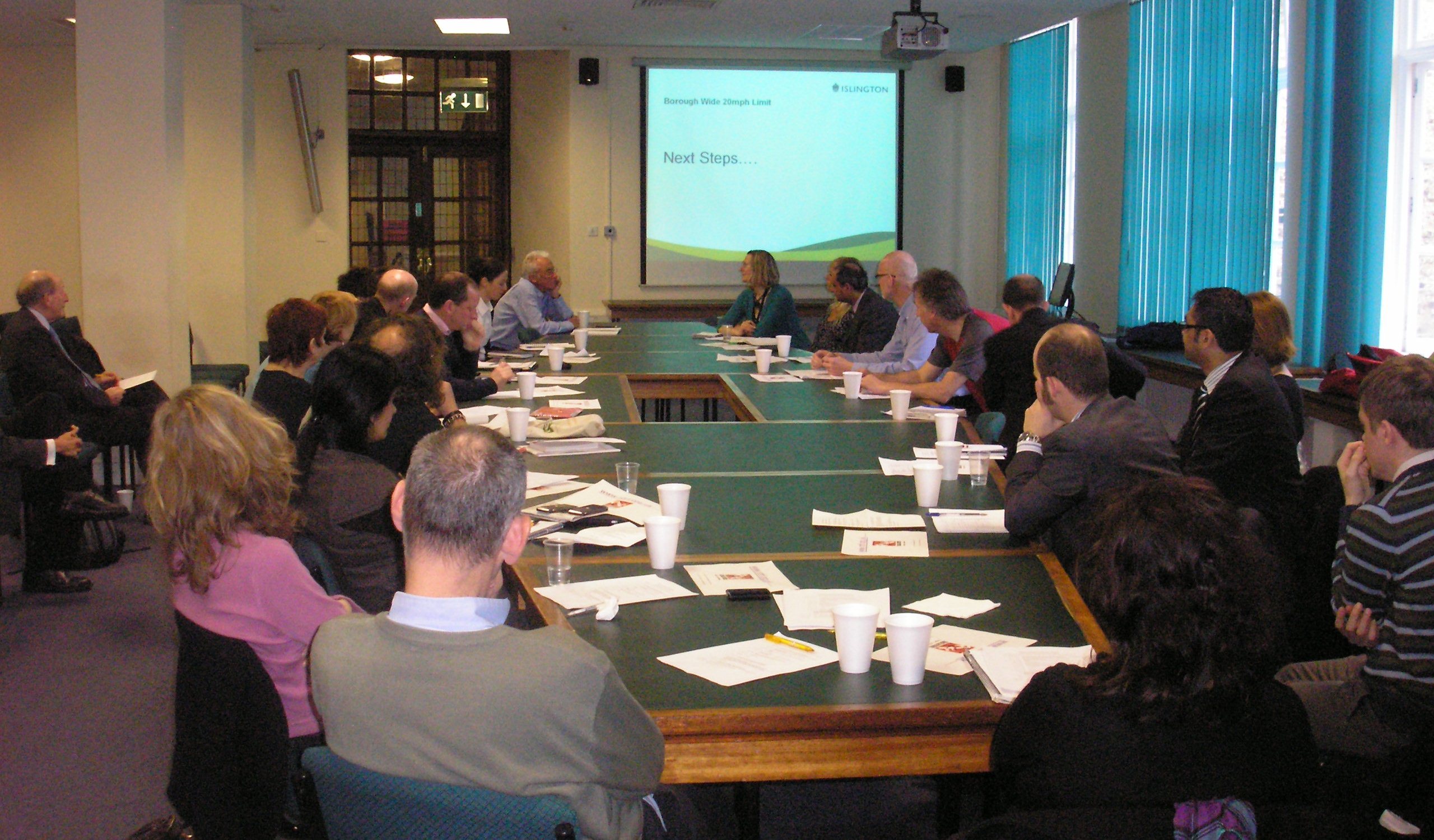
LB Lambeth hosted the seminar under this title on March 16th. Below RDRF Chair Dr. Robert Davis gives an account and his views of where this productive seminar takes the Road Danger Reduction agenda: Continue reading
LB Lambeth hosted the seminar under this title on March 16th. Below RDRF Chair Dr. Robert Davis gives an account and his views of where this productive seminar takes the Road Danger Reduction agenda: Continue reading
A postscript to our pieces here and here. The BBC has replied to complaints by RDRF supporters with the following Continue reading
In London it’s consultation time for Local Implementation Plans and the occasion for seeing what your local authority might be saying with regard to road danger and sustainable transport. What follows is relevant for Local Transport Plans throughout the country, but I’ll be concentrating on London as I know more about it.
London Borough of Lambeth (first Highway Authority in the UK to have a Road Danger Reduction Manager) is going to be running a seminar on March 16th: “Embedding Road Danger Reduction in Local Transport Plans” at which I’ll be giving a version of this post. Places are pretty much taken up, but if you want to come – it’s invitation only – do drop me an e-mail at chairrdrf@aol.com . So: what is happening with the London LIPs? Continue reading
Here are some additions to the previous post which should help you deal with the inevitable opposition. Any suggestion that idiot-proofing the car environment (as shown in the Horizon film) is anything less than positive will be met by one crucial argument.
This argument is this: Measures such as seat belts, roll bars, air bags, collapsible steering wheels are the main reason (along with highway engineering such as cutting down roadside trees, installing crash barriers, anti-skid treatments etc.) are the main reason why road traffic deaths per motor vehicle distance travelled have declined through the twentieth century in countries experiencing motorisation.
This argument is wrong: take a look here for a very brief explanation why. Continue reading
My answer to this question is: Yes. If you want to see how the BBC displays the worst of “road safety” culture, look at this programme broadcast on February 9th 2011: (If you want to protect your screen, watch with no heavy objects to hand).
What makes this connivance even worse is that it occurs in the name of safety and “saving lives”. If you are unfamiliar with the principles of Road Danger Reduction, let’s start off by defining some basic terms: Continue reading
As we enter 2011 there is a strong chance of a step change in the adoption of Road Danger Reduction (RDR) policy by a local authority – and by a city, no less.
While some of the ideas of RDR have filtered through to at least parts of the mainstream – and to all those bodies with any kind of genuine concern for the well being of cyclists and pedestrians and for sustainable transport policy in general – the uptake of RDR has been patchy, to say the least. Even the 30 or so local authorities that have signed the RDR Charter have either fallen by the wayside, or else been unable to address the problems of traditional “road safety” ideology and practice, even where key Councillors and officers are sympathetic.
Hopefully this may be about to change if Bristol City Council follows up on the report Road Danger Reduction in Bristol? , a report organised by Bristol City Council Road Safety, Bristol PCT and the University of the West of England http://www.bristol.gov.uk/ccm/content/Transport-Streets/Road-Safety/road-danger-reduction-in-bristol.en .
While there is a lot which is heartening in the report, plainly a great deal of work needs to be done to embed the positive attitudes displayed in the work of the Council. Continue reading
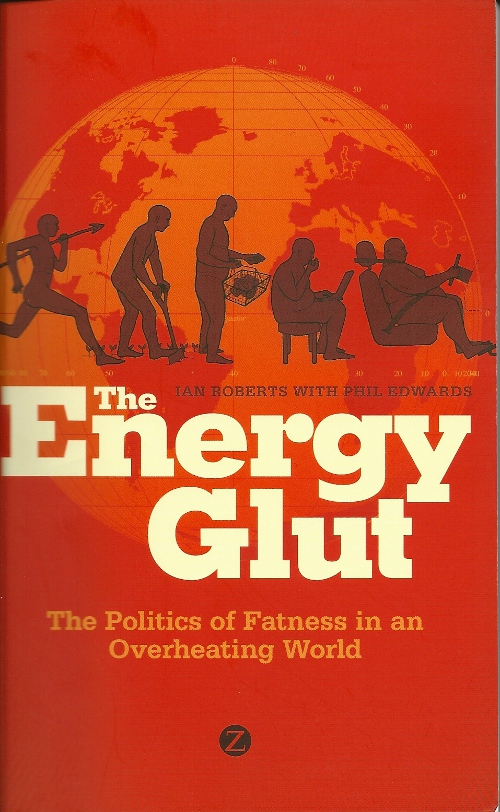
At the founding of the RDRF in Leeds in 1993 we were confronted with the issue of, well, what would our name be? Would anybody understand or use the phrase Road Danger Reduction? I think we can give ourselves a pat on the back: RDR has been formally endorsed by (among others) the CTC (National cyclists’ organisation), London Cycling Campaign, RoadPeace, Living Streets, Twenty’s Plenty, the Environmental Transport Association, and the Road Danger Reduction Charter signed up to (if not actively pursued) by a number of local authorities. Of course, getting the approach understood – differentiating us from “road safety” and publicising the sustainable transport agenda – is another issue from getting it accepted by the powers that be. After the Comprehensive Spending Review, it looks like we’re going backwards – or at least not forwards…
But now the good news: if we can’t actually get the RDR programme on the official agenda, we have got a forceful endorsement of RDR in this superb book: “Real road safety means reducing road danger, which implies far fewer motor vehicles travelling at much lower speeds” (p.84) and, on the twinned themes of the book:” The only practicable response to climate change and population weight gain is that walking and cycling are re-established as the predominant modes of urban transportation“(p.119).
Epidemiologist Professor Ian Roberts of the London School of Hygiene and Tropical Medicine is well known to us for his work on the effects of 20 mph zones and his critique of the pressure for road building from the global “road safety”/car industry lobby in developing countries. As with his previous work, the links between different parts of the effects of mass motorisation are established. Except it is not just the two main themes of the health disbenefits of mass car use and the greenhouse gas emissions from motor vehicles, but road danger, the effects on local community, and dependence on oil. On top of this, obesity and global warming are shown to be linked more intricately and deeply than we might have ever thought. All of this is presented in a polemic fuelled by (justifiably) righteous anger and backed up by a solid evidence base.
We have some criticisms (see below) but this short book is a must read for transport practitioners with a conscience and a genuine interest in the problems of the current transport system – and at least an indication of what we can and should do about it. Continue reading
Take a look at this report from the Transport and Health Study Group: http://www.healthandtransportgroup.co.uk/research/research20_july2010.php. Health on the Move: Active travel – a preliminary report from the THSG. February 2010, by N Cavill, A Davis, M Wardlaw, S Watkins, J Mindell.
So far just the first three chapters are published, but we understand the whole report will be out later this year. The health benefits of the “active travel” modes are a key argument in the sustainable transport case, and are presented here by some of the top experts in the field in the UK. Continue reading
By which I mean, of course, the term “vulnerable road user”…

“Men are always trying to protect me, I wonder what they are trying to protect me from…”. Mae West
A lot of colleagues think that it is helpful to refer to pedestrians (particularly children and elderly people) and cyclists as “vulnerable road users”. I disagree: seeing people who just happen to be outside metal boxes as being special easily morphs into seeing us AS A PROBLEM. It is often connected to what has been referred to as the “Fear of Cycling”. It misses out on the elephant in the room – or what the excellent Mikael Coville-Anderson of Copenahgenize.com refers to as “The Bull in the China Shop”. Continue reading
 Road Danger Reduction Forum