Category Archives: Road Danger Reduction

A bad day for safety on the roads

       PRESS RELEASE   Wednesday May 11th 2011

“Nationally and internationally, this is a bad day for safety on the roads”.

Subject: UN “Decade of Action for Road Safety” and Department for Transport “Strategic Framework for Road Safety”.

This dark day for a civilised approach to danger on the roads will be symbolised by the UK Prime Minister David Cameron welcoming Formula One racing drivers to 10 Downing Street. Both the UN and UK “strategies” are based on misleading measures of safety on the road and conniving with careless and dangerous driving.

Globally, we support our colleagues in RoadPeace saying that: “reducing road danger, through the reduction in speed, volume and dominance of motorised vehicles, is essential not only to reduce road deaths but also to tackle the twin crises of climate change and obesity”.

Nationally, a civilised approach to safety on the road requires reducing danger at source from careless and dangerous driving, with proper accountability from those responsible for it. But this has once again been opposed by the Department for Transport’s downgrading of the importance of careless driving by reducing likely penalties and ineffective “education” for bad drivers.

Note to Editors:

The Road Danger Reduction Forum is a transport professionals-based organisation with support from cycling, pedestrian, road crash victims and sustainable transport organisations in the UK. Go to www.rdrf.org.uk

Above is our Press Release. We will be spending some time saying what is so wrong with these two strategies, meanwhile let’s get one of the perpetrators of the global strategy to show his true colours: 

Lord Robertson – http://www.bbc.co.uk/iplayer/episode/b01114ks/Today_11_05_2011/  Listen at 2:41:50. This excerpt was aired at the RoadPeace conference at London School of Hygiene and Medicine on May11th to gales of laughter.

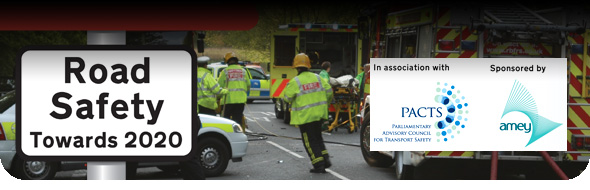
Major article on Road Danger Reduction in Local Transport Today

I’m pleased to report that Local Transport Today, the fortnightly journal for transport practitioners, has given us a significant outlet for publicising Road Danger Reduction (RDR) in it’s special supplement “Road Safety: Towards 2020”, out now (LTT570 06 May – 19 May 2011). Below I reproduce the published article of your Chair’s description of RDR- and how it differs from the rest of the contributions in the supplement. The supplement also includes a piece by Norma Fender, the UK’s first Road Danger Reduction Officer, on RDR work at LB Lambeth. Thanks LTT! Continue reading

RoadPeace event

Saving people and planet

a road danger reduction approach for a safer fairer world

So here’s some good news for a change – an event promoting road danger reduction : do get along to this event next week (May 11th at London School of Hygiene and Tropical Medicine) organised by our friends RoadPeace. Read about it here. It is based on a very traditional “road safety” initiative which hopefully RoadPeace will distance itself from.

What A Nerve!: How dare the AA lecture cyclists on safety!

The Automobile Association (and the other organisation for irresponsible motorists, the Royal Automobile Club) has a long history being part of danger on the road. Take a look at this clip to show how it proudly flouted road traffic law:This Motoring . The current, particularly grotesque, example of the AA offloading its responsibilities on to the actual or potential victims of rule and law breaking by AA members (and other motorists protected from proper regulation and controls by the AAs refusal to support real road safety)

The latest episode is simply part of this tradition. Of course, it is par for the course in a world where “road safety” is often about victim-blaming and avoiding motorist responsibility, despite lack of evidence for supposed benefits: it can be telling your potential victims to get out of the way – for their own good, of course. But that’s no reason to accept this nonsense, as it is part and parcel of maintaining unacceptable levels of danger on the road. Continue reading

London LIPs: if Northern Ireland can suggest it…

Most London Borough’s Local Implementation Plans (LIPs) for the next five years have gone through the consultation process, so it’s probably too late to make comments now. But it’s still worth commenting on what was put into them as indicators of how far Road Danger Reduction (RDR) is being considered by London Boroughs. We have commented on how much RDR is being referred to before . LB’s Lambeth, Southwark, Ealing, Haringey, Brent and Corporation of London all refer to the RDR approach. But most are failing  to push through RDR policies, or even set out a full RDR agenda. Below we look at what’s going on… Continue reading

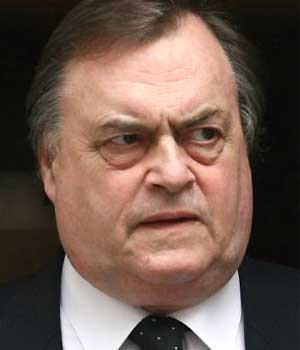
The double disaster of John Prescott

As we continue with the war for the careless and subsidised motorist, it is tempting to see current problems as starting with the present Government.This is quite wrong: the obstacles to sustainable transport and safe roads for all have long standing roots in government transport and “road safety” policies. In particular, we need to remember the double disaster of the reign of John Prescott. Continue reading

Road Danger Reduction and Local Implementation Plans

In London it’s consultation time for Local Implementation Plans and the occasion for seeing what your local authority might be saying with regard to road danger and sustainable transport. What follows is relevant for Local Transport Plans throughout the country, but I’ll be concentrating on London as I know more about it.

London Borough of Lambeth (first Highway Authority in the UK to have a Road Danger Reduction Manager) is going to be running a seminar on March 16th: “Embedding Road Danger Reduction in Local Transport Plans” at which I’ll be giving a version of this post. Places are pretty much taken up, but if you want to come – it’s invitation only – do drop me an e-mail at chairrdrf@aol.com . So: what is happening with the London LIPs? Continue reading

Conniving with Violence?: Part Two

Here are some additions to the previous post which should help you deal with the inevitable opposition. Any suggestion that idiot-proofing the car environment (as shown in the Horizon film) is anything less than positive will be met by one crucial argument.
This argument is this: Measures such as seat belts, roll bars, air bags, collapsible steering wheels are the main reason (along with highway engineering such as cutting down roadside trees, installing crash barriers, anti-skid treatments etc.) are the main reason why road traffic deaths per motor vehicle distance travelled have declined through the twentieth century in countries experiencing motorisation.
This argument is wrong: take a look here for a very brief explanation why. Continue reading

Horizon's "Surviving a Car Crash": does the BBC connive with violence?

My answer to this question is: Yes. If you want to see how the BBC displays the worst of “road safety” culture, look at this programme broadcast on February 9th 2011: (If you want to protect your screen, watch with no heavy objects to hand).

What makes this connivance even worse is that it occurs in the name of safety and “saving lives”. If you are unfamiliar with the principles of Road Danger Reduction, let’s start off by defining some basic terms: Continue reading

Road Danger Reduction in Bristol?

As we enter 2011 there is a strong chance of a step change in the adoption of Road Danger Reduction (RDR) policy by a local authority – and by a city, no less.
While some of the ideas of RDR have filtered through to at least parts of the mainstream – and to all those bodies with any kind of genuine concern for the well being of cyclists and pedestrians and for sustainable transport policy in general – the uptake of RDR has been patchy, to say the least. Even the 30 or so local authorities that have signed the RDR Charter have either fallen by the wayside, or else been unable to address the problems of traditional “road safety” ideology and practice, even where key Councillors and officers are sympathetic.
Hopefully this may be about to change if Bristol City Council follows up on the report Road Danger Reduction in Bristol? , a report organised by Bristol City Council Road Safety, Bristol PCT and the University of the West of England http://www.bristol.gov.uk/ccm/content/Transport-Streets/Road-Safety/road-danger-reduction-in-bristol.en .
While there is a lot which is heartening in the report, plainly a great deal of work needs to be done to embed the positive attitudes displayed in the work of the Council. Continue reading