Following the Alliston case (discussed here and here) we have discussed the demands for parity between cyclists and motorists with regard to the response from the criminal justice system, not least from the Kim Briggs Campaign . In particular, we have studied the meaning of The Times instruction to cyclists to “respect the rules of the road like everyone else” . We showed
that this would in fact mean that “cyclists” (the term refers to everybody who may ever ride a bicycle) would actually have to break rules and laws a lot more, and have to endanger other road users far, far more. That’s the actual rule and law breaking: what about the responses of the criminal justice system once the rule and law breaking has been detected, and in particular once collisions have occurred? Continue reading
Category Archives: Cycling
Policing of close passing of cyclists in the UK: update on progress by November 2017
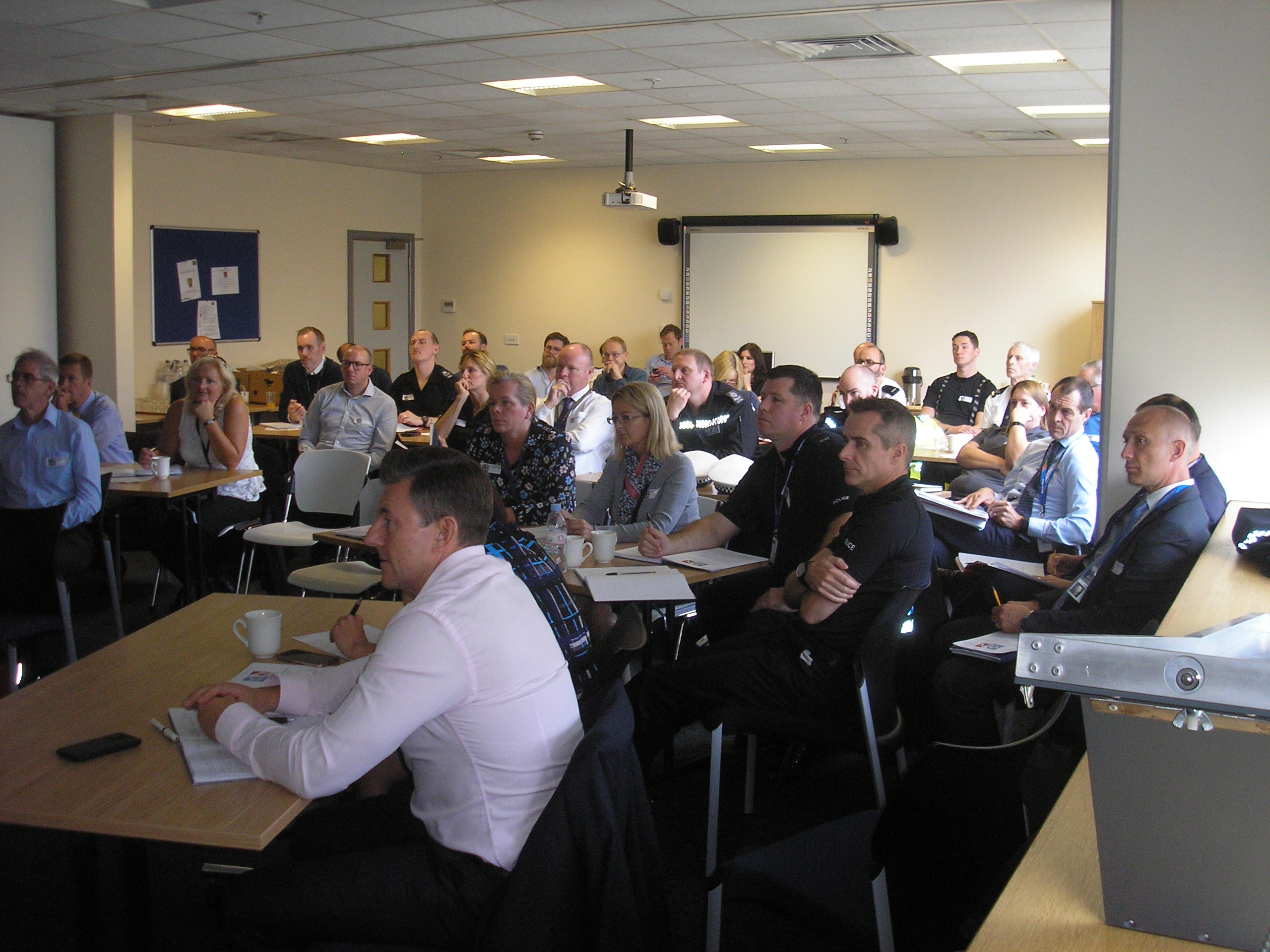
Some of the 42 delegates
On September 19th the Road Danger Reduction Forum, in partnership with West Midlands Police, held a training day on “Policing close passing of cyclists and related behaviours” courtesy of West Midlands Fire Service in Birmingham. Below is a brief report back on the current situation, a year after RDRF gave a special award to the ground breaking work done by West Midlands Police
Since that time RDRF has been acting as Secretariat for WMP’s work in this area, collecting and disseminating information to and from Police Services throughout the UK, with an information pack sent out to interested forces. There has been a flurry of initiatives during that time, with a variety of operations carried out. A particular new area is the development of 3rd party reporting, which we highlight as it is likely to involve a significant change in traffic policing.
Below is a summary of reports back from Police Services which attended the training day Continue reading
“The Times” instructs cyclists to break the rules: what’s going on?
This post may seem a little late, based as it is on an Editorial in The Times from August 25th. Nevertheless, as with other comments arising from the Alliston case (here and here) its subject tells us some very revealing things about the way road user behaviour is either accepted or stigmatised by the society we live in. Any serious attempts to reduce danger on the road involve a proper conversation about what we should or shouldn’t tolerate in the road environment. So let’s take a look at The Times instruction.
The Alliston case: after the verdict
The previous post has had more views than any other in our history. We have received significant support for its content in comments and on Twitter, and also – as one must expect in the age of social media – abuse and insult. Although readers will judge for themselves, it is striking how the insults have been based on a lack of evidence and – above all – misreading of what the piece was about.
So, to repudiate the insults, let’s clarify what the piece was – and more importantly was not – about. We can then move on to an assessment of where we are now after an extraordinary week.
The Charlie Alliston case: the real story
Over the last week there has been front page coverage of the case of one Charlie Alliston, who hit pedestrian Kim Briggs in central London in a collision resulting in her death. . Naturally it is unlawful and wrong to cycle with one rather than two effective braking systems, and we will accept the verdict of the court when it comes later today. But for me the real story here is not what happened on a central London street in February 2016.
Continue reading
Close passing policing starts up in London
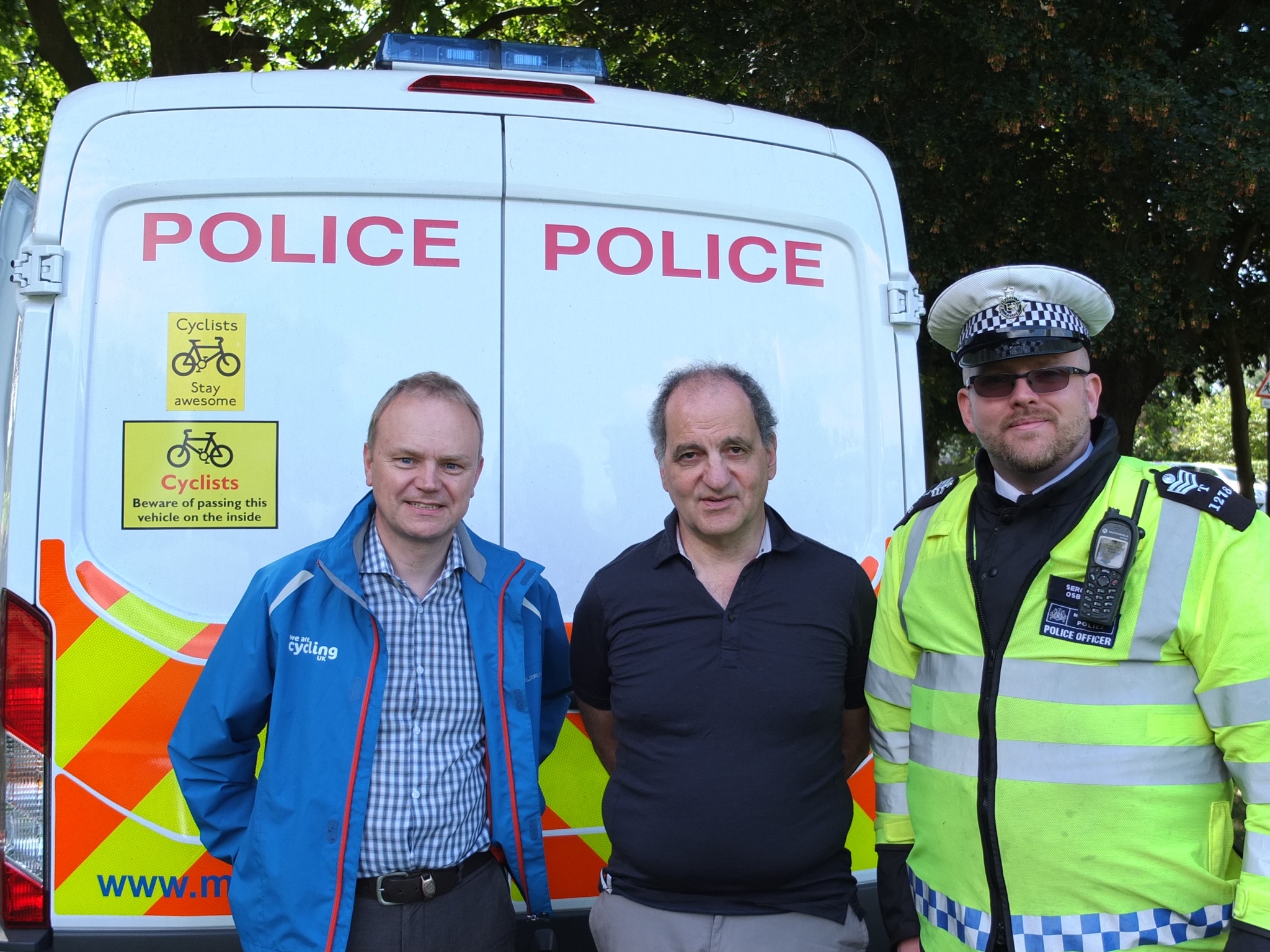
The main RDRF activity this year has been supporting the roll out of police operations targeting close passing of cyclists and related behaviours. Today we were pleased to attend and support the launch of the Met’s initiative in this kind of law enforcement, called “Space for Cyclists”, in south London.
RDRF Chair Dr Robert Davis with Duncan Dollimore of CyclingUK and Sgt. Andy Osborne of the Met’s Cycle Safety Team
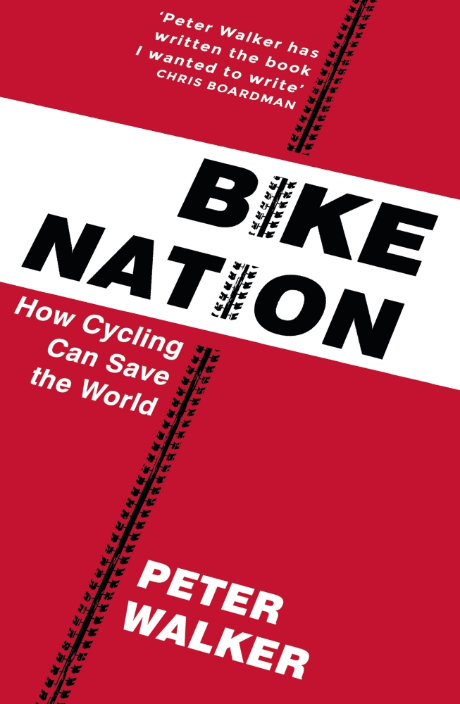
REVIEW: “BIKE NATION: How Cycling Can Save the World” by Peter Walker
This book is “…above all, a story of hope”. Those of us with a cynical mindset might be put off by such optimism and the extravagant claim of the title. But don’t be: Peter Walker is more or less spot on in each chapter of a book which clearly argues for cycling as a key solution to urban transport, health, social and environmental problems. Indeed, it should be read by all professionals – as well as campaigners and the general public – with an interest in transport policy, not just those who find themselves in a “cycling” niche. Continue reading
What kind of policing do we need?
We think road traffic law enforcement is a key element in potentially reducing danger on the roads. Whatever changes in highway and vehicle engineering occur, the safety of all road users will depend at least partly on how the law is enforced. Of course, what happens with sentencing is also key, but here we address the way the police operate. Most importantly, how the police behave should be seen as a central element of how society accepts or stigmatises behaviours.
Our view is that the attitudes of the police will at least partly reflect the prejudices of ordinary members of the public in what is a motor-centred society. We have criticised elements of policing in the past and suggested ways in which it can be improved. In the worst cases we have argued that the response (or lack of it) to rule- or law-breaking driving makes this society “nothing less than fundamentally uncivilised”.
But we have recently seen what appears to be a fundamental change in some police forces with the adoption of policing of close passing of cyclists .We will be monitoring and reporting on developments in this area. Most importantly, along with what happens with other elements of the legal system, we note that the way policing is done is a reflection of whether road danger is seen – as it would be in a civilised society – as the problem it is.
Below we comment on the good and the bad in police services at the beginning of 2017.
Driving bans and the Government consultation on driving offences
Below is a letter sent by road danger reduction, pedestrians”, cyclists’ and road crash victims’ groups including RDRF to the Government. It seems to us obvious that in a planned consultation on driving offences the role of driving bans should be key. It’s explained in our letter below:
Vision Zero – what’s wrong with Richard Allsopp’s critique of it
In the transport practitioner’s fortnightly journal Local Transport Today (Viewpoint, LTT 704), Professor Richard Allsopp – a key figure in Britain’s “road safety” establishment – made a critique of the “Vision Zero” movement. While we have some issues with the Vision Zero approach, we find it necessary to criticise Professor Allsopp’s article, featuring as it does some key features of “road safety” ideology. Here is our response as printed in Local Transport Today 705:- Continue reading